
In World of Warcraft, adapting to different bosses demands a keen understanding of their unique mechanics. Identify critical buffs and debuffs, enhance damage thresholds, and time your cooldowns effectively. Balance your raid team with specific role assignments and crowd control to alleviate tank stress. Real-time communication, using add-ons and studying community strategies, is key. Master positioning by keeping tanks efficient and DPS safe, and recognize environmental hazards swiftly. Coordinate damage mitigation and track cooldowns rigorously. Effective adaptation involves ongoing encounter analysis, gear enhancement, and synergy between abilities. There’s more to master in ensuring your raid’s success.
Key Takeaways
- Understand boss mechanics and adjust strategies for buffs, debuffs, damage outputs, and healing as needed.
- Maintain balanced team composition with clear role assignments and flexibility for quick adaptation to fight dynamics.
- Utilize effective communication through real-time updates, in-game add-ons, and voice platforms to coordinate tactics.
- Master positioning and movement strategies to control tank positioning, DPS placement, and avoid environmental hazards.
- Develop damage mitigation techniques through coordinated cooldown timing, damage reduction abilities, and healer synchronization with boss cycles.
Understanding Boss Mechanics
How well do you understand the essential aspects of mastering boss mechanics in World of Warcraft? To excel, you need a firm grasp of several critical elements like buff mechanics and debuff management. Every fight demands awareness of buffs that enhance your damage, healing, or survivability, and timely dispelling or mitigating debuffs to prevent wiping the raid.
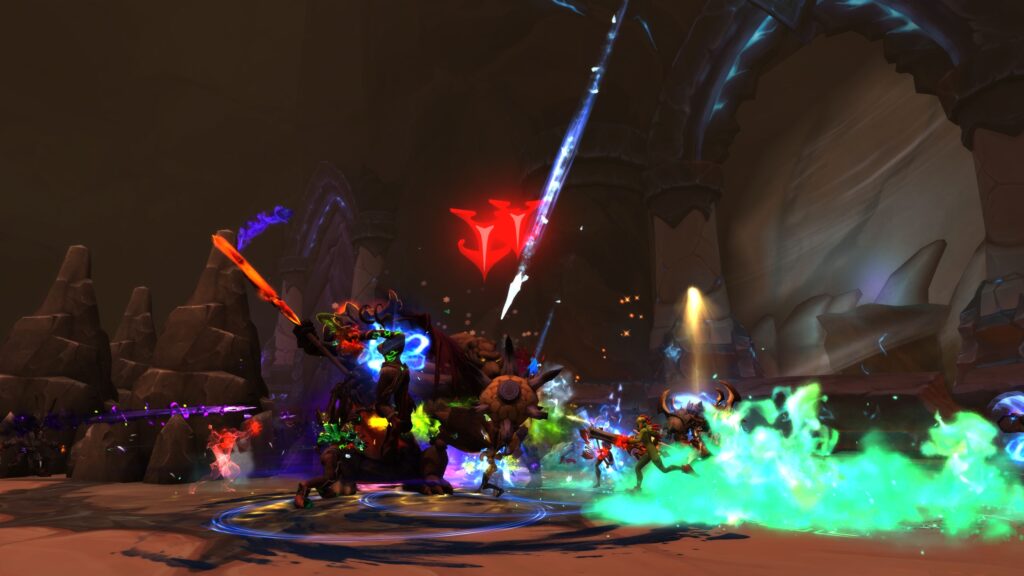
Recognizing damage thresholds is fundamental. Bosses often have abilities that require immediate, significant damage output. Your raid’s burst capabilities can make or break these moments. Understanding cooldown utilization is equally important; knowing when to use defensive cooldowns for damage reduction or offensive cooldowns for burst phases can turn the tide of the battle.
Healing strategies must adapt to encounter pacing and phase shifts. Some phases will need robust healing to counter AoE damage, while others may permit more conservative resource use. Ability timing and mechanics synergy are essential. Coordinate abilities like Bloodlust with significant boss mechanics to maximize efficiency.
Team Composition Tactics
In successful raids, team composition tactics are indispensable for enhancing performance and efficiency. You need a balanced mix of tanks, healers, and DPS to guarantee smooth progression. Your tanks should be durable and able to manage the boss’s aggro effectively, while your DPS must maximize their output without pulling threat. However, the glue holding all this together is your strategic use of healer rotations.
Maintaining peak healer rotations is essential. Rotate your healers to keep mana levels sustainable and guarantee consistent healing throughput. Assign specific healers to particular roles—a primary tank healer, off-tank healer, and those focusing on raid-wide damage. This structured approach prevents moments of vulnerability and keeps everyone alive during intense phases.
Crowd control, often underestimated, is another important tactic. Use it strategically to manage adds, reduce stress on your tank, and buy necessary time for DPS to focus on the boss. Classes with strong crowd control abilities, like mages with Polymorph or hunters with traps, should be integrated effectively into your composition.
Effective Communication
Effective communication in raids hinges on clear role assignments and real-time updates. You’ll make sure everyone knows their responsibilities before the battle starts, minimizing confusion and delays. During the raid, maintain a steady stream of updates to adapt to changing conditions and unexpected challenges.
Clear Role Assignments
Achieving seamless raid execution hinges on clear role assignments, guaranteeing each player understands their specific responsibilities and objectives. Role clarity is vital for minimizing chaos and maximizing efficiency during encounters. Each player’s role, whether tank, damage dealer, or healer, must be explicitly defined. Assigning tasks based on each player’s strengths optimizes their contribution to the team. Don’t forget, assignment flexibility is equally important. Boss mechanics can often shift mid-fight, requiring some roles to adapt on the fly.
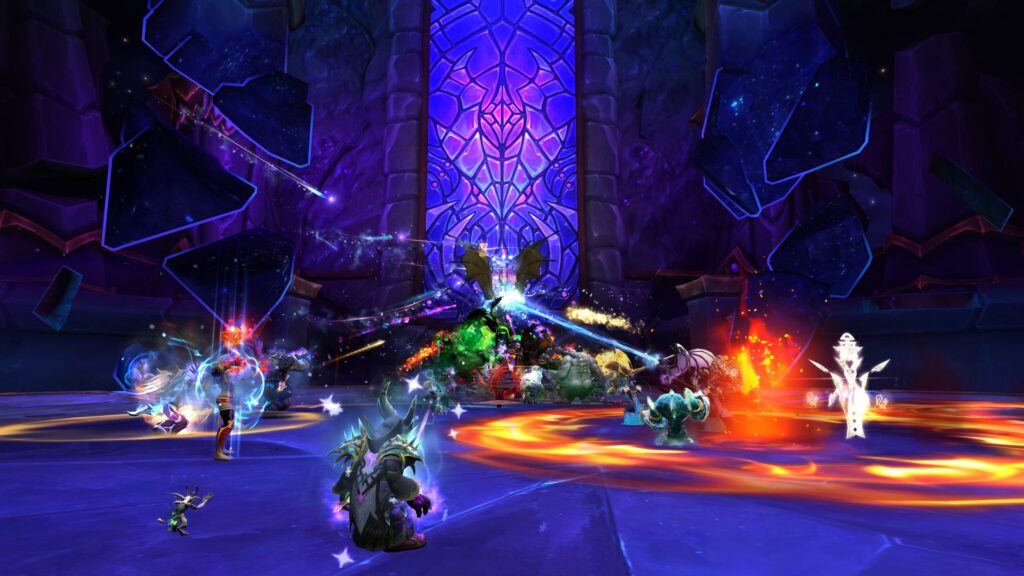
For instance, if your main tank gets incapacitated, a designated off-tank should be ready to step in without hesitation. Assign backup roles during your pre-raid briefing, so everyone knows who’ll take over in emergency scenarios. Maintaining fluid communication about these roles and adjustments can make or break your raid’s success.
Incorporate visual aids like spreadsheets or role-assignment add-ons to provide a quick reference for everyone. This guarantees no one is left second-guessing their job mid-battle. Regularly revisiting these assignments between raid attempts can help you refine your strategy, making each run smoother. Clear role assignments not only streamline operations but also enhance overall team confidence, setting you up for victory against even the toughest bosses.
Real-Time Updates
Coordination is the backbone of successful raids, and real-time updates are critical to maintaining that synergy. You need to keep an eye on a live feed for the most recent strategy updates and boss modifications. A single missed detail can lead to a wipe, so make certain you’re effectively communicating encounter adjustments as they happen. Utilizing tools that provide real-time feedback, like in-game add-ons or voice communication platforms, can make a significant difference. When new patch notes are released, they often include changes that impact raid mechanics, so staying informed offers a competitive advantage.
Analyze community strategies to see how top guilds are reacting to these changes. They frequently adapt their approaches based on the latest updates, and you can integrate their tactics into your own plan. During the raid, assigning a specific individual to monitor real-time feedback and convey these updates will streamline your decision-making process. This person can quickly relay information about any boss modifications, making certain that the team adjusts its tactics on the fly. Mastering the art of real-time updates not only enhances your raid’s efficiency but also keeps your team at the forefront of endgame content.
Positioning and Movement
When it comes to positioning and movement, keeping the tank in the best spot to maintain aggro and control is essential, while DPS should be strategically placed to maximize damage output without drawing enemy attention. Focus on avoiding environmental hazards like fire patches and poison zones to prevent unnecessary damage. Always be aware of boss mechanics that require movement, and plan your team’s positioning accordingly to guarantee maximum efficiency and survival.
Tank and DPS Placement
Effective tank and DPS placement is essential for success in World of Warcraft raids. You need to verify that tanks correctly execute rotations and DPS players time their cooldowns precisely. Positioning isn’t just about where you stand but how you move throughout the encounter.
- Tank Rotations: Assign clear responsibilities for main tank and off-tank. Rotate every time the boss applies debuffs to spread the damage evenly.
- DPS Cooldowns: Allocate specific windows to activate high-damage abilities. This guarantees maximum impact during important phases.
- Distance Management: Keep ranged DPS and healers spread out to avoid overlapping area damage while maintaining line of sight with the tanks.
- Boss Orientation: Rotate the boss away from the raid to reduce the risk of frontal attacks hitting multiple players and to manage cleave mechanics effectively.
- Kiting Patterns: When the strategy involves kiting, plan the tank’s movement path in advance to avoid disrupting DPS placements and minimize crossfire.
Every player needs to understand their role in positioning to contribute to the raid’s success. Properly managing tank rotations and timing DPS cooldowns will make smoother encounters. Remember, every step counts, and precise placement can mean the difference between a wipe and a win.
Avoiding Environmental Hazards
Steering through environmental hazards is essential for maintaining positioning and movement integrity during World of Warcraft raids. Environmental awareness enables you to foresee and navigate obstacles, critical for avoiding unnecessary damage and maintaining peak team positioning.
First, keen hazard recognition is important. Identifying potential threats—whether it’s fire patches, falling debris, or moving lasers—early in the encounter gives you the edge in staying mobile and safe. Use addons like Deadly Boss Mods or BigWigs for real-time alerts, enhancing your hazard recognition.
Next, plan your movement. Raid environments are dynamic; pillars may collapse, ground effects could expand. Know the raid’s layout, safe zones, and predicted boss abilities. For example, if there’s a frontal cone attack, sidestep to predetermined positions. Communicate these strategies across your raid team to guarantee cohesive movement.
Finally, practice quick adaptability. Static positioning won’t suffice; you’ll need to react fluidly to changing conditions. Utilize speed boosts or mobility cooldowns when necessary. Remember, keeping an ideal positioning not only safeguards your health but also maximizes DPS time on target.
Being tactical with positioning and adaptive to environmental hazards will drastically improve your raid success. Stay vigilant and move with purpose.
Damage Mitigation Strategies
Damage mitigation is a pivotal aspect of any successful raid strategy in World of Warcraft. To guarantee your raid group withstands the toughest bosses, you need to focus on several tactical components. Here’s a detailed breakdown of what you should prioritize:
- Damage Reduction: Use abilities and items that grant damage reduction to critical players, especially tanks. Monitor these buffs closely.
- Cooldown Management: Properly time defensive cooldowns to mitigate incoming heavy damage, coordinating with healers for maximum effectiveness.
- Ability Timing: Understand and anticipate the boss’s ability cycles to pre-emptively mitigate incoming damage, spreading harm across the raid evenly.
- Healing Strategies: Ascertain healers focus on targeted and efficient resource allocation, synchronizing their spells with damage spikes to avoid overhealing.
- Shield Usage: Shields can absorb considerable damage that isn’t always healable. Use abilities and items that provide shields when the situation demands it.
Conduct armor stacking to enhance your squad’s durability. Implement debuff tracking vigilantly to cleanse harmful effects immediately. Spread damage wisely among your team to reduce individual load. Monitor threat levels constantly to guarantee tanks maintain control. By focusing on these strategies, you can notably improve your raid’s survivability and efficiency. Effective damage mitigation is about planning and executing precise tactical actions.
Adapt and Overcome
When you’re deep into a challenging raid, the ability to adapt and overcome unforeseen obstacles stands as one of the most vital skills your team can possess. Start with thorough encounter analysis to break down boss mechanics and phases. This will inform your strategy revisions, guaranteeing your approach remains fluid.
Gear optimization is essential; confirm each member has the best possible setup for their role. Effective cooldown management is another key component; track these closely to maximize uptime and survival. Synergy maximization is significant—coordinate abilities and buffs for peak performance.
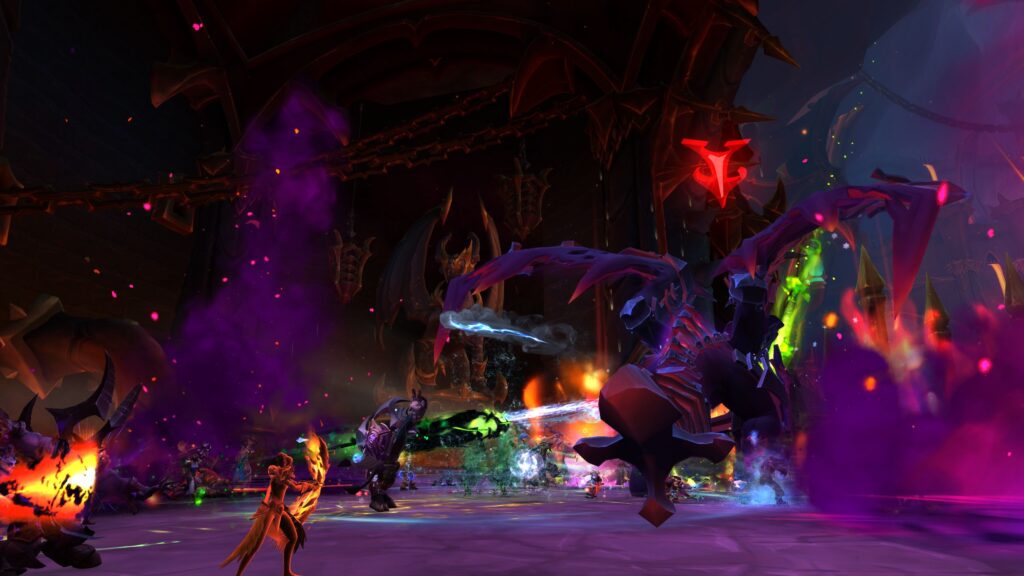
Fight pacing allows you to control the flow of the battle, avoiding rushed mistakes or prolonged exposure to dangerous mechanics. Adaptability training helps your team swiftly adjust to changing conditions. This includes resource allocation—confirm healers have enough mana and DPS classes maintain stamina.
Threat management is fundamental to keeping the boss’s attention where you want it, preventing unnecessary damage to more vulnerable team members. Finally, situational awareness keeps everyone alert to environmental hazards and sudden shifts in the fight.
Frequently Asked Questions
What Add-Ons Are Most Helpful for Raid Strategies?
The best add-ons for raid strategies include Deadly Boss Mods (DBM) for encounter mechanics, Details! for combat logs and DPS rotation analysis, and ThreatPlates for threat management. Add-ons like Healbot aid in healing strategies, while BigWigs helps with boss positioning. For team communication, use Discord with add-on customization. These tools enhance every aspect of raiding, ensuring your team tackles each challenge with precision and efficiency.
How Do You Balance Loot Distribution Fairly Among Raid Members?
Think of loot distribution like dividing a pie; everyone deserves a fair slice. To guarantee balance, you can use loot prioritization strategies such as DKP (Dragon Kill Points) or EPGP (Effort Points/Gear Points). These fair distribution methods reward attendance and participation. Remember to communicate clearly with your raid members about the system in place. This guarantees everyone understands and agrees, preventing resentment and ensuring smooth operations.
What Are the Best Practices for Managing Consumables During Raids?
Managing consumables during raids requires consumable prioritization and effective coordination. First, establish a priority list for consumables like potions, flasks, and food buffs based on each raid member’s role. Assign a raid member to keep track of the inventory and distribute them evenly. Encourage communication to avoid overuse or shortage. This tactical approach guarantees everyone is well-prepared, enhancing overall raid performance and resource management.
How Do You Handle a Team Member Repeatedly Making Mistakes?
When a team member repeatedly makes mistakes, employ effective communication techniques and offer constructive feedback. Start by observing specific issues and having a private conversation to avoid embarrassment. Use clear, objective language and provide actionable suggestions. Encourage open dialogue, so they can express their challenges. It’s also beneficial to set up follow-ups to monitor improvement. This approach guarantees everyone stays on track with minimal disruption.
What Should You Do if a Boss Encounter Is Bugged?
Boss bugging brings battles to a standstill. First, follow bug report protocols meticulously to notify developers. Next, discuss encounter workarounds with your team, focusing on feasible fixes or alternative strategies. Keep communication clear and concise to prevent confusion. Analyzing the issue collectively can often lead to a tactical solution, ensuring you’re prepared for anything. Always document any strategies that work for future reference and refinement.
Conclusion
You’ve now got the playbook to dominate every World of Warcraft raid boss. Like a maestro leading an orchestra, understand mechanics, compose your team, maintain clear communication, master positioning and movement, and mitigate damage with precision. Each strategy is a brushstroke in your masterpiece of victory. So, plunge into the battlefield, adapt and overcome, and turn every encounter into a symphony of triumph. Your raid group’s success is in your capable hands—don’t let victory slip through your fingers.
Find out best raiding guides here!
